Cleaning equipment and safe routines: 10 one-minute lessons
Short lessons for cleaners, each with its steps written out under the video. Watch them in order with a new starter, or send one lesson to the cleaner who needs it.
01 · 1 min
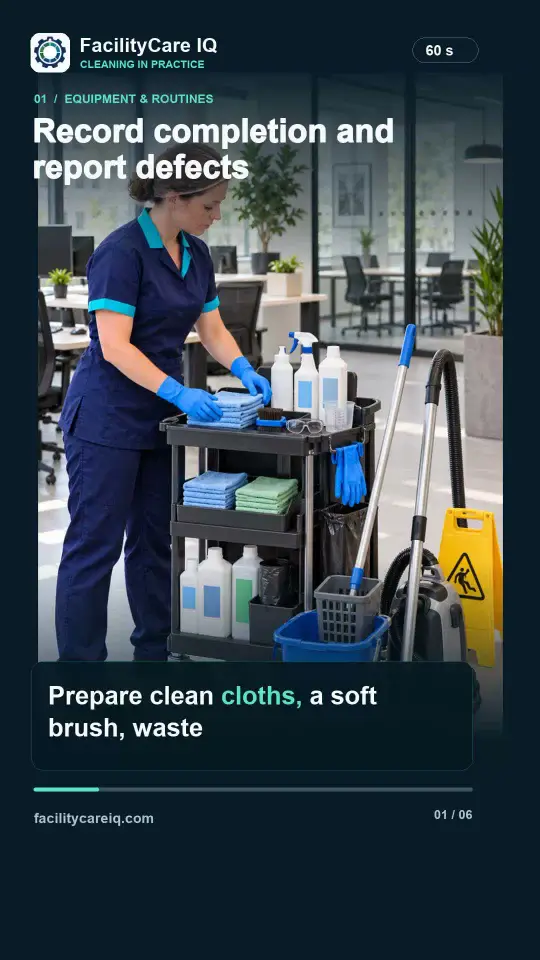
How to put together a cleaning kit for the task
Steps
Read the job sheet before collecting equipment. Identify the room, surfaces and expected soil so the kit matches the task and the site’s cleaning zones.
Check clean cloths, correct attachments, compatible labelled products and required protection. Include a traditional mop and wringer bucket only when the approved floor method calls for them.
Pack the trolley with heavier items low and bottles upright. Separate clean supplies from used textiles and waste; check wheels and keep the route unobstructed.
Confirm the container holds the approved product and the label is readable. Never use an unidentified bottle or judge a chemical by colour, scent or packaging alone.
Read intended surfaces, dilution, protection, ventilation and any contact time or rinse requirement. Use the site’s safety information if needed; ask when instructions are unclear.
Use the product only as directed and never mix it with another cleaner. Close the container after measuring; report damaged packaging or an unreadable label before proceeding.
Use only the approved compatible container and dosing system for the product. Check it is clean, intact and intended for that chemical; never reuse a drinks or food container.
Prepare the solution exactly as instructed and apply the required workplace label before use. Include the product identity, dilution and preparation or expiry details required by the procedure.
Keep the original safety information available and close the container securely. Do not top up unknown leftovers; follow disposal and renewal instructions and report missing labels.
Keep cleaning cloths separate by zone (follow your color code)
Steps
Check the site’s own colour or labelling system. Colours are not universal across Europe; follow the local allocation for toilets, general areas and food-contact surfaces.
Keep clean supplies in separate protected compartments and take only the assigned cloth into each zone. Never return a used cloth to the clean stack or dip it into clean stock solution.
Change cloths when soiled and at the procedure’s zone boundaries. Put used textiles in the correct collection container and follow the hand-hygiene or glove-change steps.
How to fold a cleaning cloth to always use a clean side
Steps
Start with a clean cloth assigned to the area. Prepare it using the product and surface instructions; it should carry controlled moisture, not drip onto the work.
Fold the cloth in half, then in half again to form manageable faces. Wipe systematically with one clean face, then refold to expose a fresh section as it becomes soiled.
Replace the cloth when clean faces are exhausted or the procedure requires it. Folding is not washing; never use a contaminated side on the next clean surface.
Choose protection from the product instructions and site assessment. Gloves must suit the chemical and task; one glove type is not suitable for every product.
Inspect gloves for tears, wear and contamination before putting them on. Use eye protection and other equipment when required, checking fit and condition according to the instructions.
Replace damaged protection immediately. Remove used gloves with the trained method, avoiding contact with the contaminated exterior, and clean your hands; gloves do not replace hand hygiene.
At the designated service area, empty used solution according to the product and site disposal rules. Keep this work away from handwash basins and food-preparation sinks.
Use dedicated tools to remove soil from bucket walls, rim, handle and accessible wringer surfaces. Follow the equipment instructions and keep hands clear of moving pinch points.
Complete required disinfection, rinse and drying as directed. Store the bucket empty and dry, inspect wheels and fittings, and report cracks or defects before reuse.
Place used cloths in the designated collection container as the site requires. Keep them separate from clean stock and do not shake them or carry loose wet cloths through clean areas.
Follow the approved laundry process for the textile and its contamination level. Do not invent a wash temperature or combine incompatible loads; disposable materials follow their waste procedure.
After the required process, dry fully and inspect for wear or remaining soil. Store clean cloths protected by zone, and keep clean handling separate from dirty collection.
Return products to the designated secure storage after work. Follow label and site rules for temperature, ventilation and separation of incompatible chemicals, away from food and personal items.
Keep containers closed, upright and correctly labelled in approved containment where required. Never transfer chemicals into drinks bottles or store leaking containers without following the spill procedure.
Check the cupboard is tidy, access is controlled and emergency information remains available. Report damaged labels, expired stock or leaks; do not hide them behind other bottles.
How to record finished cleaning work and report defects
Steps
Compare completed work with the assigned checklist. Check the actual condition of surfaces and equipment; a tick should represent a finished task, not a planned one.
Record the area, time and completion status as the site requires. Describe remaining soil, damage or missing supplies clearly without exposing private documents or personal information.
Escalate urgent hazards immediately and keep unsafe areas restricted. Assign unfinished actions to the responsible person and confirm handover; never mark unresolved work as complete.
Before you use these lessons
These are routine overviews. The site's instructions, the equipment's care instructions and the product label always come first, and a one-minute lesson does not replace the full contact time or drying time. Colours in the pictures are not a cloth colour code: follow your site's own.
The lessons are illustrated with AI-generated images and narrated by a synthetic voice in British English. The scripts draw on public guidance on routine cleaning, such as the UK Health and Safety Executive's and Food Standards Agency's.
Put the routine on the cleaner's job card
FacilityCare IQ shows each cleaner tonight's sites with the address, access notes and the site's checklist, in their own language, and clocks them in by GPS. Free for 2 buildings.
 FacilityCare IQ